
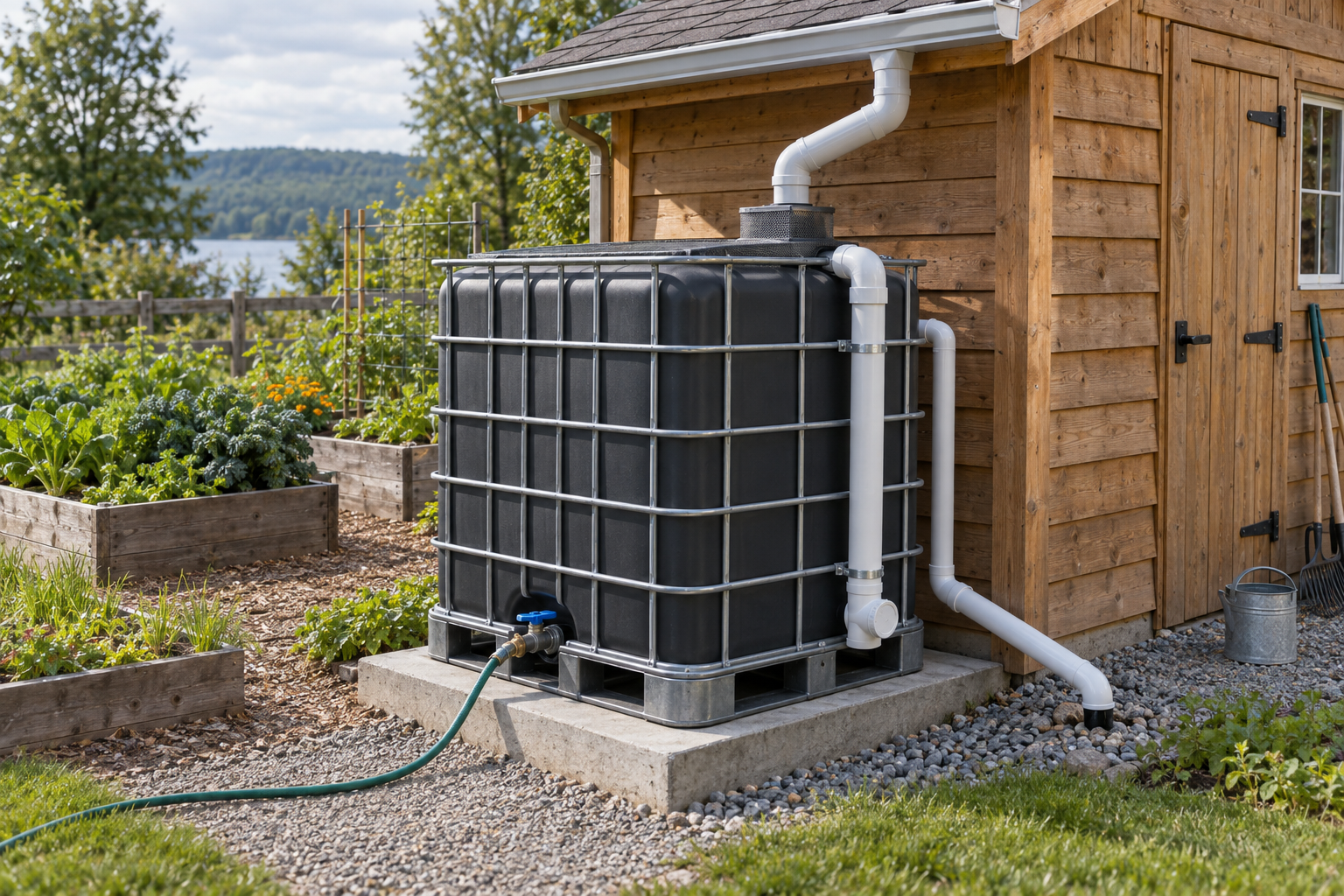
Start with a safe, suitable tote
Use a clean, food-grade IBC tote with a known history. Never collect irrigation water in a tote that previously contained fuel, pesticides, industrial chemicals or any substance you cannot positively identify. A rinsed tote is not automatically a safe tote.
Inspect the plastic bottle, cage, pallet and outlet valve for damage. Place the tote on a solid, level base capable of supporting its full weight. A filled 1,000-litre tote weighs more than a tonne, so soft soil, loose blocks and uneven pallets are not suitable foundations.
- Choose a food-grade tote with a known history
- Use a level, load-bearing base
- Keep the tote secured against movement
- Block sunlight to reduce algae growth
Identify the outlet before buying an adapter
IBC outlets are not all the same. S60×6 coarse buttress thread is common, but some totes use fine threads, different diameters or a 2-inch camlock connection. Measure the outside diameter, count the thread style and inspect the valve before ordering.
A typical garden setup uses an adapter that converts the tote outlet to a 3/4-inch garden-hose thread or hose bib. Fit a sound gasket, hand-tighten the large plastic adapter and use thread sealant only on connections designed for it. Overtightening can distort the gasket or crack the fitting.
- S60×6 coarse-thread adapter or the adapter that matches your tote
- Replacement sealing gasket
- Brass hose bib or full-flow shutoff valve
- Garden-hose quick connector and thread-sealing tape
Screen debris before it reaches the tank
Keep leaves, needles and roof debris out as early as possible. Clean gutters, install a leaf screen or rain head and use insect-proof mesh anywhere the system is open to the air. The inlet screen should be removable so it can be cleaned regularly.
Cover every opening. Mosquitoes can breed in small amounts of standing water, and rodents or insects can enter through an unprotected overflow pipe.
Add a first-flush diverter
The first water coming off a roof carries much of the dust, pollen, bird droppings and fine debris that accumulated between rainfalls. A first-flush diverter sends that initial runoff into a separate chamber before cleaner water is directed to the tote.
Size and adjust the diverter for the roof area and local conditions rather than relying on one universal setting. It must drain between storms and remain accessible for cleaning. A first flush improves water quality, but it does not make roof water safe to drink.
- Install it after the leaf screen and before the tote
- Use an adjustable slow-drain valve
- Clean the chamber and drain opening regularly
- Divert the discharge away from foundations
Build a controlled inlet and overflow
Direct incoming water through a screened inlet without leaving the tote lid open. A calming inlet or downward-facing pipe reduces disturbance at the bottom of the tank, where fine sediment settles.
The overflow must be at least as capable of moving water as the inlet. Fit it near the top of the tote, screen it against insects and route it to a safe drainage area or a second tank. Do not allow overflow to wash out the base or collect against a building.
Using collected rainwater in the garden
Roof-collected rainwater is best treated as non-potable water. It can be useful for ornamental plants, soil gardens and greenhouse irrigation, but water quality depends on the roof, gutters, wildlife activity, storage conditions and maintenance.
Use extra caution on edible crops. Avoid spraying questionable water directly onto produce that will be eaten raw, especially close to harvest. Local health guidance and regulations should take priority for any food-production or commercial use.
Using rainwater for hydroponics
Rainwater can have low mineral content and low alkalinity, which may be useful but can also make pH change quickly. Test the source water before mixing nutrients and continue monitoring pH and EC after the reservoir is prepared.
Do not pipe untreated roof runoff directly into a recirculating hydroponic system. Fine filtration, appropriate treatment and routine water testing may be needed because a closed system can spread contamination to every plant. When food safety matters, get advice appropriate to your crop and intended use.
Maintain the system
Inspect the roof, gutters, screens, first-flush unit, tote and fittings throughout the season. Remove sediment as needed, repair leaks promptly and keep the tote shaded or covered. Drain or protect exposed fittings before freezing weather.
A simple maintenance record helps: note when screens were cleaned, when the first-flush chamber was serviced and whether the stored water changed in colour or smell. If the water looks or smells wrong, stop using it until the cause is understood.
- Clean gutters and inlet screens
- Test the overflow before heavy rain
- Check fittings and the support base
- Inspect stored water before use
- Winterize valves and exposed pipework