
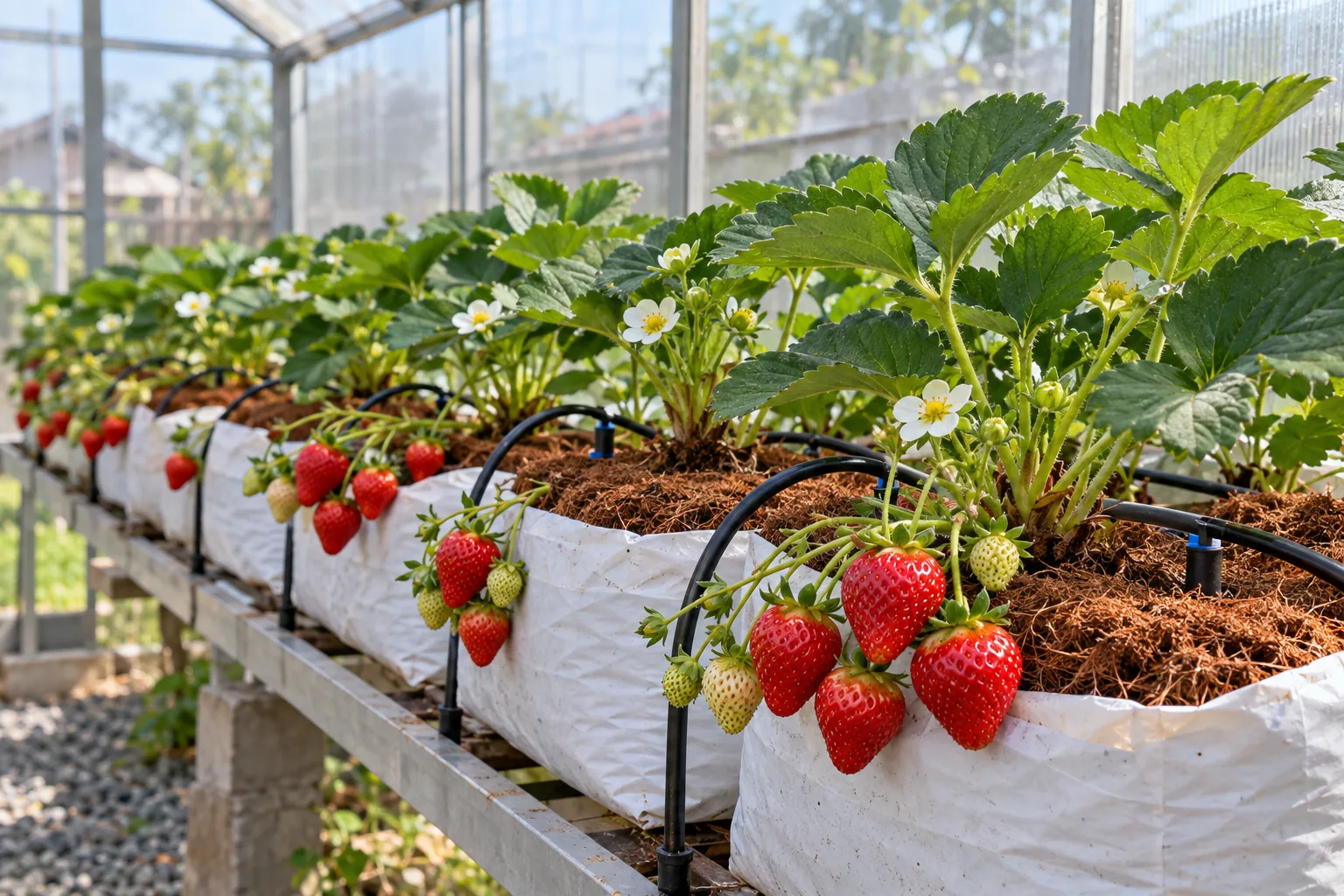
Choose plants and a simple system
Start with healthy, disease-free strawberry transplants or bare-root crowns from a reputable nursery. A day-neutral variety is a useful choice if you want fruit over a longer season, although flowering still depends on light, temperature and plant health. Growing from seed takes much longer and may not give you the same plant as the named variety on the packet.
Use individual containers or grow bags filled with rinsed coco coir, or coco coir mixed with perlite. Put a dripper at each plant and let excess solution drain freely. A reservoir, pump, timer and collection tray complete a small setup. Keep the nutrient reservoir covered and out of strong sun. A recirculating system can work too, but it needs closer attention to water quality and sanitation.
- Healthy strawberry plants
- Coco coir and containers with drainage
- Reservoir, pump, timer and drip lines
- A suitable hydroponic nutrient and pH/EC meters
Plant with the crown above the medium
The crown is the short, thick growing point where the leaves and roots meet. Spread the roots into the moist medium, cover the roots and leave the crown at or slightly above the surface. Burying the crown can encourage rot; leaving the roots exposed dries them out. Give each plant room for air movement and for berries to hang clear of wet surfaces.
If moving a plant from soil, gently remove loose soil and inspect the roots before it joins the system. Avoid introducing visibly unhealthy plants to a shared reservoir.
Mix nutrients and check pH and EC
Mix a complete hydroponic nutrient according to its label and start at the mild end of the manufacturer's strawberry guidance. Measure both pH and EC after mixing, then watch their trend along with the plants. EC tells you the total dissolved salts, not whether every individual nutrient is balanced. Make small adjustments, allow the solution to mix and measure again.
Keep the medium evenly moist without leaving roots waterlogged. Check that every dripper works and that the containers drain. On warm days the plants may need more frequent short irrigations; use the feel of the medium and the drainage to guide the timer. Do not assume the nutrient mix I use for lettuce is automatically right for strawberries.
Give flowers light, airflow and pollination
Place plants where they receive strong light and good airflow. In a greenhouse, vent excess heat and humidity and watch for condensation or grey mould on flowers and fruit. Indoors, a suitable grow light and gentle air movement help, but you will also need to pay attention to pollination.
Most strawberries are self-fruitful, yet each flower needs pollen moved across many tiny receptive parts to make a well-shaped berry. Outdoors, insects do much of that work. In a closed indoor space, gently brush the centre of each open flower with a clean, soft brush or lightly vibrate the flower, repeating while new flowers open. Small or misshapen berries can have several causes, but poor pollination is one to check.
Maintain the plants and harvest
Remove dead leaves and unwanted runners so the planting stays open and manageable. Inspect leaf undersides and flowers for pests, and remove any mouldy fruit promptly. Keep fruit off wet surfaces and clean tools and trays between crops.
Pick berries when they are fully coloured and handle them gently; strawberries do not become much sweeter after picking. For a first run, keep a short log of the variety, nutrient readings, irrigation schedule, flowering and harvest. Those notes will tell you more than chasing a perfect number from someone else's system.